 Image 1 of 1
Gros Morne, Newfoundland and Labrador. The Tablelands don't look like anywhere else on Earth. That's because the rock here was formed in the earth's mantle — material normally hidden miles below the surface, thrust up by continental collisions as the Appalachian Mountains were built.
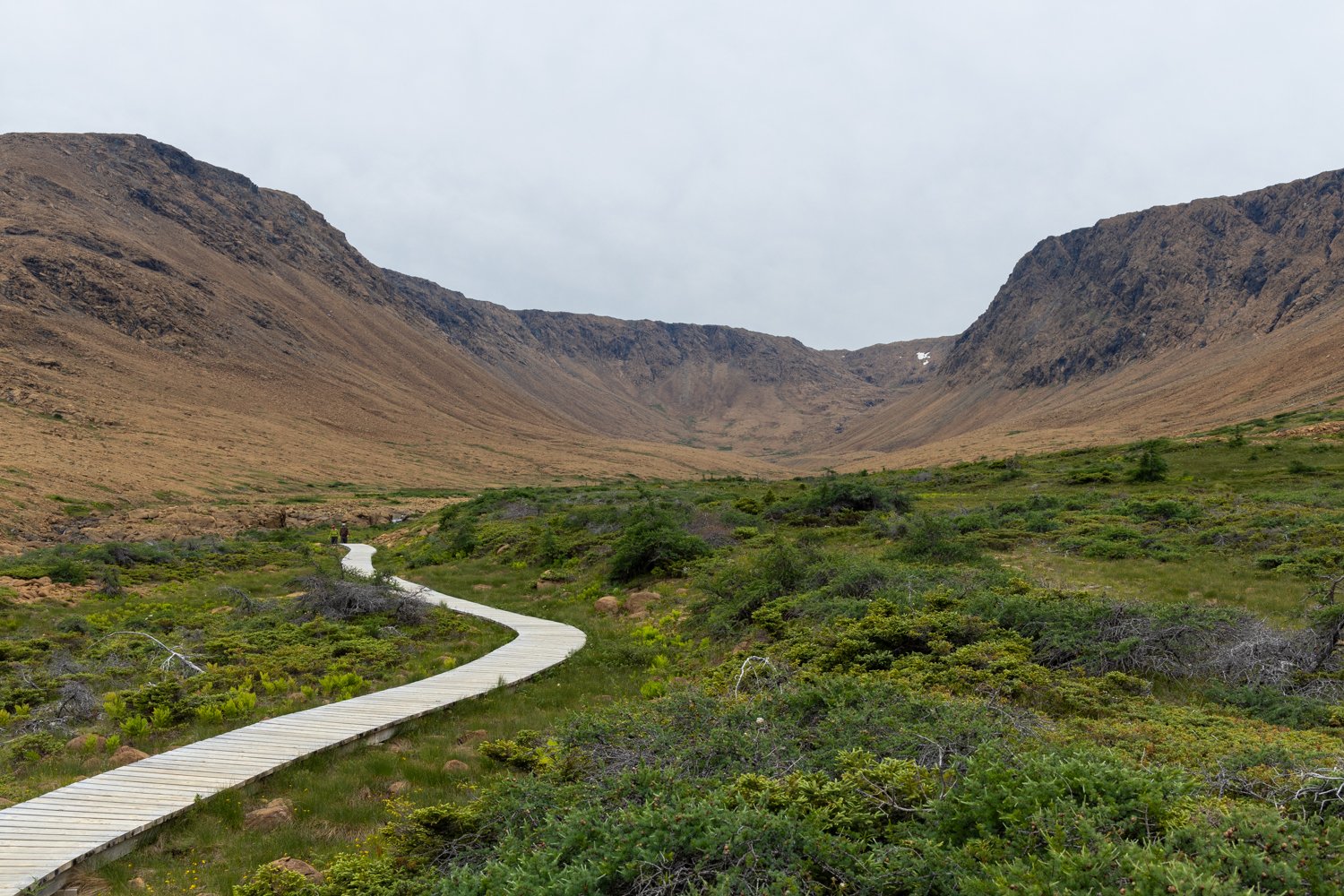
Walking into the Tablelands feels like walking on another planet. The rock is orange-brown, iron-rich material that's toxic to most plants. The result is a barren moonscape where almost nothing grows, an alien terrain surrounded by green forests that stop abruptly at the edges of the formation.
I photographed the Tablelands on an overcast day, which emphasized the orange of the rock against the grey sky. The lack of vegetation means the geology is completely exposed — you can see the layers, the fault lines, the story written in stone. It took more than 400 million years for the original mountains to erode to create what is left.
What makes the Tablelands significant is what they reveal about planetary processes. Standing here, you're standing on something that shouldn't be visible — the planet's interior made accessible.
The hiking trails are easy, but the landscape is challenging in its strangeness. Your eyes keep looking for green, for life, for normalcy, and keep being refused. It's disorienting in the best way.
Limited edition Chromaluxe metal print. The brushed finish complements the rock textures. Gros Morne photography for those who appreciate seeing what's usually hidden.
Gros Morne, Newfoundland and Labrador. The Tablelands don't look like anywhere else on Earth. That's because the rock here was formed in the earth's mantle — material normally hidden miles below the surface, thrust up by continental collisions as the Appalachian Mountains were built.
Walking into the Tablelands feels like walking on another planet. The rock is orange-brown, iron-rich material that's toxic to most plants. The result is a barren moonscape where almost nothing grows, an alien terrain surrounded by green forests that stop abruptly at the edges of the formation.
I photographed the Tablelands on an overcast day, which emphasized the orange of the rock against the grey sky. The lack of vegetation means the geology is completely exposed — you can see the layers, the fault lines, the story written in stone. It took more than 400 million years for the original mountains to erode to create what is left.
What makes the Tablelands significant is what they reveal about planetary processes. Standing here, you're standing on something that shouldn't be visible — the planet's interior made accessible.
The hiking trails are easy, but the landscape is challenging in its strangeness. Your eyes keep looking for green, for life, for normalcy, and keep being refused. It's disorienting in the best way.
Limited edition Chromaluxe metal print. The brushed finish complements the rock textures. Gros Morne photography for those who appreciate seeing what's usually hidden.


